7 Questions to Ask HubSpot Onboarding Partners
Selecting the right CRM onboarding services partner can define whether your HubSpot investment delivers ROI or becomes another underutilized tool. For revenue operations teams managing complex sales cycles, the stakes are even higher. WeSimplifi helps businesses ask the right questions before signing with any HubSpot onboarding partner.
This guide breaks down seven critical questions you should ask potential partners. Each question targets a specific area that separates experienced HubSpot implementation specialists from generic consultants.
Key Takeaways: 7 Questions to Ask HubSpot Onboarding Partners
- Automation expertise should align with your specific revenue operations workflows and business outcomes.
- Integration depth matters more than the number of tools a partner claims to connect.
- Data quality processes during migration determine whether your CRM starts on solid foundations.
- WeSimplifi delivers tailored onboarding with a proven 5-step framework for faster time to value.
- Post-onboarding support structures reveal whether a partner invests in your long-term success.
Essential Questions for Evaluating CRM Onboarding Partners
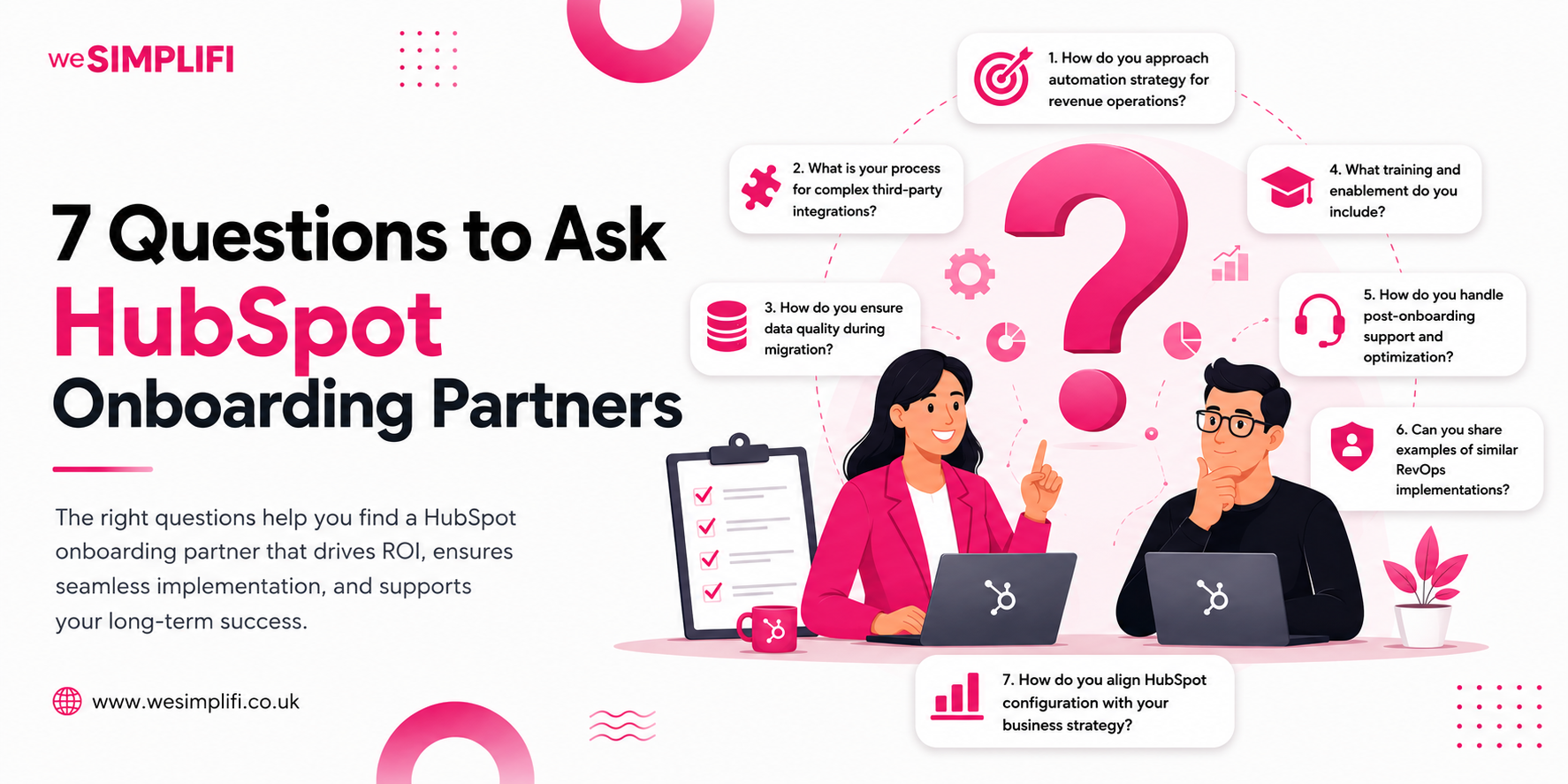
1. How Do You Approach Automation Strategy for Revenue Operations?
A strong onboarding partner starts with your business outcomes, not generic templates. Ask how they map automation workflows to your specific sales cycle stages, lead scoring needs, and handoff processes between marketing and sales teams.
Look for partners who can explain how they connect automated sequences to measurable revenue goals. The answer should include discovery questions about your current tech stack and operational bottlenecks.
2. What Is Your Process for Complex Third-Party Integrations?
HubSpot rarely operates in isolation. Your CRM needs to communicate with your ERP, finance systems, and custom platforms. Ask potential partners about their integration methodology and how they handle non-standard connections.
Experienced partners will describe a structured approach: mapping data flows, identifying potential sync conflicts, and building error-handling protocols. Generic responses like "we use native integrations" should raise concerns.
3. How Do You Ensure Data Quality During Migration?
Data migration is where many HubSpot onboarding projects fail. Ask specifically about deduplication processes, field mapping strategies, and how the partner handles data normalization across different source systems.
A qualified partner will discuss pre-migration audits, staging environments for testing, and validation protocols before going live. They should also explain how they maintain data integrity throughout the transfer process.
4. What Training and Enablement Do You Include?
CRM adoption depends on your team's confidence with the new system. Ask about training formats, ongoing access to learning resources, and how the partner tailors education to different user roles across sales, marketing, and service teams.
Strong onboarding partners include role-specific training sessions, documentation customized to your workflows, and access to HubSpot Academy certifications. Ask how they measure training effectiveness beyond session attendance.
5. How Do You Handle Post-Onboarding Support and Optimization?
Onboarding is the beginning, not the end. Ask potential partners what happens after the initial setup phase. Do they offer ongoing optimization services, regular strategy reviews, or on-demand support?
Look for partners who build scalable systems designed for future growth. Your business will evolve, and your CRM configuration should adapt alongside it without requiring a complete rebuild.
6. Can You Share Examples of Similar RevOps Implementations?
Request case studies or references from businesses with similar complexity levels, industry challenges, or team structures. Ask specifically about timeline, obstacles encountered, and how the partner addressed unexpected issues.
A confident partner will connect you with past clients who can speak to the actual experience. Vague portfolio claims without verifiable references warrant caution during your evaluation process.
7. How Do You Align HubSpot Configuration with Business Strategy?
Technical setup should support your broader business objectives. Ask how the partner ensures that pipeline stages, custom properties, and reporting dashboards align with how your leadership team measures success.
Strategic partners will ask about your KPIs, growth targets, and operational challenges before recommending any configuration. They should translate business goals into technical requirements that your team can act on immediately.
How to Choose the Right HubSpot Onboarding Partner for Your Team
The right partner combines deep HubSpot expertise with genuine investment in your business outcomes. Technical certifications matter, but operational understanding and communication style carry equal weight.
WeSimplifi delivers HubSpot onboarding with a proven 5-step framework tailored to mid-sized teams. As a HubSpot Platinum Partner, we specialize in complex integrations, advanced automation, and building scalable CRM architectures that grow with your business.
Ready to evaluate your options? Schedule a consultation to discuss your specific onboarding requirements.
FAQs about 7 Questions to Ask HubSpot Onboarding Partners
What makes a HubSpot onboarding partner qualified for revenue operations teams?
Qualified partners demonstrate experience with multi-stage sales cycles, lead scoring frameworks, and marketing-to-sales handoff automation. They should understand RevOps principles and how HubSpot configuration supports unified revenue goals across departments.
How long should a typical HubSpot onboarding process take?
Most mid-sized teams complete onboarding in four to eight weeks, depending on data migration complexity and integration requirements. Partners who promise faster timelines should explain how they maintain quality while accelerating delivery.
Should I prioritize HubSpot certification levels when selecting a partner?
Certification levels indicate platform knowledge but not implementation experience. Platinum or Diamond partners have demonstrated consistent client success. Pair certification status with case studies and client references for complete evaluation.
What red flags should I watch for during partner evaluations?
Watch for partners who jump straight to pricing without discovery, offer one-size-fits-all packages, or cannot explain their data migration process. Lack of post-onboarding support options also signals limited commitment to your long-term success.
How important is industry-specific experience for HubSpot onboarding?
Industry experience accelerates onboarding by reducing discovery time and enabling relevant automation templates. However, strong process methodology often matters more than narrow industry focus for B2B revenue operations teams.
What questions should I ask about a partner's support structure?
Ask about response times, escalation paths, and whether support includes strategic guidance or only technical troubleshooting. WeSimplifi assigns dedicated client success managers to ensure consistent communication and proactive optimization recommendations.